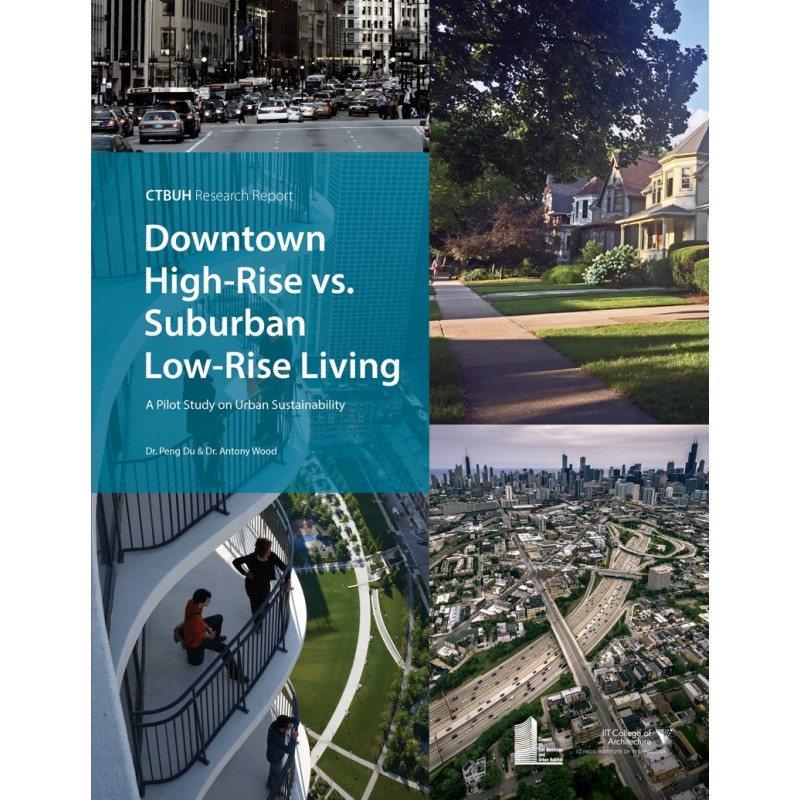
The global trend toward dense vertical cities as a solution for sustainable urban living has spurred unprecedented tall building construction worldwide. However, despite its widespread acceptance, this concept has rarely been rigorously examined at a quantitative level. Studies often rely on outdated data, such as Newman & Kenworthy's 1989 study, which lacks consideration of contemporary quality of life factors. In Chicago, a city emblematic of both tall urban structures and sprawling suburbs, this research delves into the sustainability of urban density versus suburban sprawl. Through quantitative analysis and case studies, it seeks to fill crucial gaps in understanding the environmental and social implications of these contrasting lifestyles, offering valuable insights for urban planners and policymakers worldwide.



 Return policy